
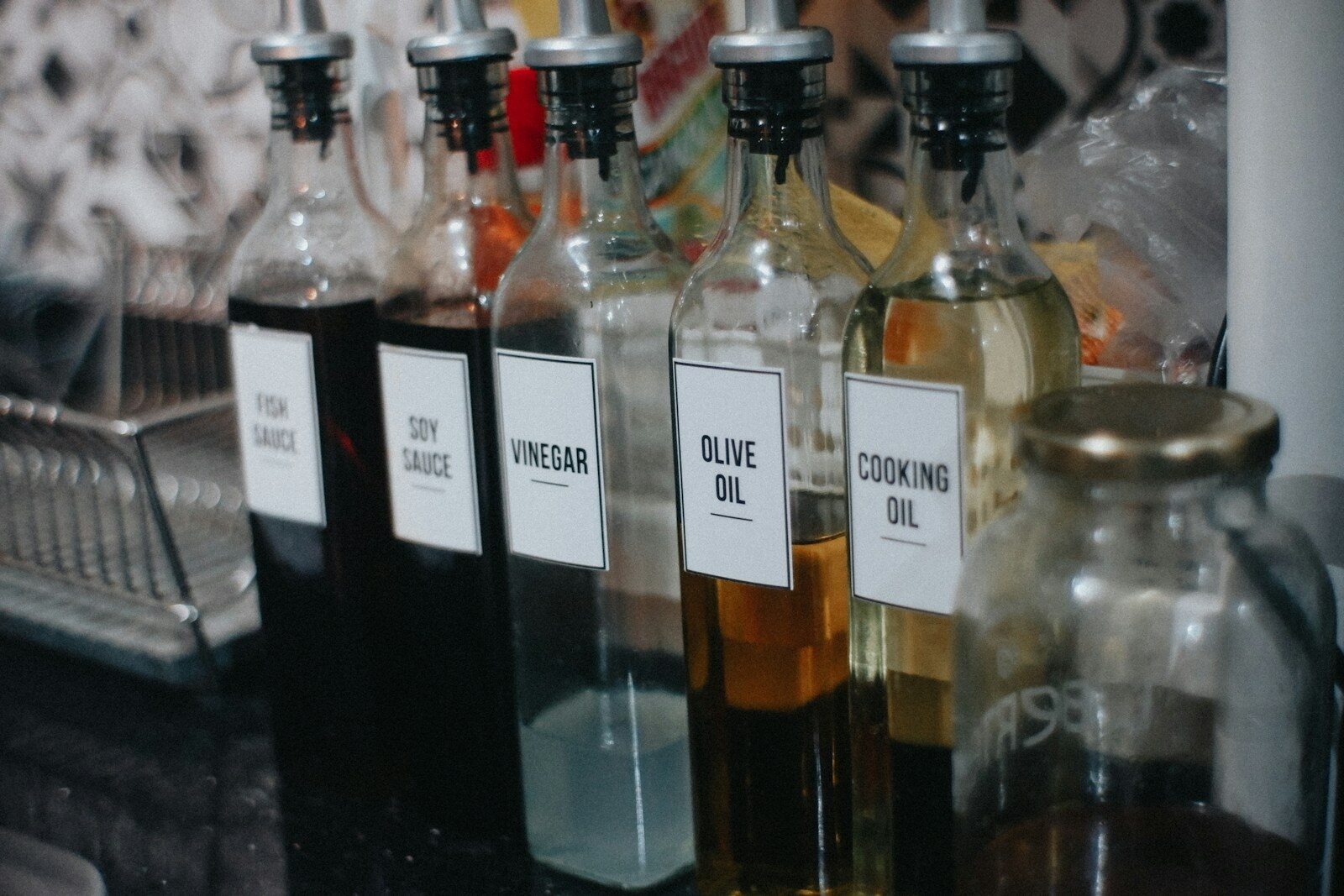
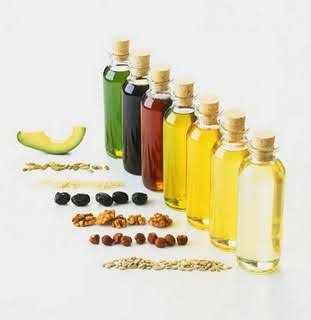
 Oil is used for sautéing, essentially to prevent food from sticking to
the bottom of the pan; for frying; and for dressing salads and flavoring
sauces. Unlike butter, which is an emulsion, oil is sometimes emulsi-
fied into a mayonnaise or vinaigrette to bring out its flavor. Its high
smoking temperature makes it a better medium than butter or animal
fats for frying or sautéing. There are many different kinds of oil, each
with its own characteristics and uses.
In India every state have different oil for cooking as tradition coconut oil in Kerala, mustard oil in northern part of India, Andrea cook with sesame oil, in Gujarat groundnut oil .But all that changed in the recent , with the scare of cholesterol and heart disease. Overnight ghee got a bad name and we were told that we should avoid trans-fats and sunflower oil became popular.
But in today it all has changed now in grocery store you will find oil with health for your health label .
I was confused when I was looking at a olive oil bottle then suddenly I found it says blended , Realy I have had heard about blended wshikey but seriously oil. It not just olive you can find many type of oil which is blended. So be open what you r buying bcoz these oil change when it will be treated with heat.
HINT
When using extra virgin olive oil in a vinaigrette
or a mayonnaise , don’t beat the
mixture hard with a whisk or it will turn bitter. Instead,
stir it gently with a wooden spoon. Another hint: Olive oil
from Sicily is beginning to appear in fancy grocery stores;
it’s often a very good value.
Extra virgin olive oil
It is conceivable for someone to live having only one oil—extra virgin
olive oil. This oil results from the first pressing of olives and is best
used as a dressing. It’s a waste to use this sometimes very expensive
oil for frying or sautéing—the high heat destroys its flavor—and there
are times, such as when making mayonnaise, when such an assertive
flavor isn’t appropriate. In an ideal world, we’d have an assortment of
extra virgin olive oils from all over the world to use on our salads or
on seafood, but most of us can be happy with one. Inexpensive extra
virgin olive oil is often comparable to more expensive brands, so unless
you’re sure of what you’re buying, you don’t necessarily get more
quality for more money. Don’t combine extra virgin olive oil with
mustard; they don’t agree. If you like mustard in your vinaigrette, use
“pure” olive oil or vegetable oil or salad oil.
“Pure” olive oil
In addition to extra virgin olive oil, “pure” olive oil is useful to have
on hand. Pure olive oil is the lowest marketable grade of olive oil,
which, in processing, has been stripped of most of its flavor compo-
nents, leaving it with a very neutral taste. This is exactly the point.
There are times when we don’t want our oil to have any taste. Use
pure olive oil for frying and sautéing because it leaves none of the
unpleasant fishy taste found in so many vegetable oils. It is also much
less expensive than extra virgin oil, whose flavor is destroyed by the
heat. Many chefs use it as an all-round oil instead of vegetable oil.
Vegetable oil
Unlike olive or nut oils, which are designed to contribute flavor to
a dish, vegetable oils such as canola oil are suited for sautéing and
frying and in salads when you don’t want the flavor of the oil to be
noticeable. Most vegetable oils are relatively benign, but occasionally
they take on an odd fishy taste; you may need to experiment with
different oils—canola, safflower, peanut—and different brands.
Nut oil
Nut oils have become very popular, but take care with them. Raw nut
oils—except for peanut oils—are almost always rancid before you even
get them home, and if they’re not, they will be soon. The best-known
maker of roasted nut oils is Le Blanc. Le Blanc’s oils are not cheap in
terms of price per volume, but you can use a tenth as much as you’d
need of an oil made with raw nuts. Store nut oils in the freezer.
HINT
To avoid rancidity and have an oil with better
flavor, buy nut oils made from roasted nuts. Roasting the nuts
brings out their flavor and helps preserve them.
Flavored oil
Some cooks like to flavor their oils with herbs such as thyme or
marjoram or with aromatic ingredients such as garlic. Use an
inexpensive extra virgin olive oil or pure olive oil, but never toywith the flavor of fine extra virgin oil.
Coconut Oil
This oil is full of saturated fat. Studies suggest that diets high in coconut oil do raise total blood cholesterol and LDL cholesterol. Coconut oil also seems to raise HDL (good) cholesterol and it has the advantage that it behaves very well at high temperatures.
Groundnut Oil
Groundnut oil or peanut oil is got a good combination of fats, and has the good monounsaturated and polyunsaturated fats and is low in bad saturated fats. It’s a good all-purpose oil for cooking and I think it works particularly well for Asian foods that are prepared in the wok.
Mustard Oil
Has a near ideal fat composition but not very good as it contains high amounts of erucic acid ranging from 35 to 48%. It is recommended that you don’t use mustard oil as the sole cooking medium. It has a high smoking point so it’s very good for deep frying.
Sesame Oil
Sesame oil comes in two colors. The lighter one is used in India and the Middle East, and is pressed from untoasted seeds. It has a mild flavour and a high smoking point. The darker variety has a distinct nutty aroma and taste and works very well in Asian food as a marinade or in stir fries.Both types of oils are high in polyunsaturated fat but they should never be heated for too long. Sesame oil also contains magnesium, copper, calcium, iron and vitamin B6.
Rice Bran Oil
A fairly new kid on the block and a fast rising favourite amongst the manufacturers, rice bran oil is made from the outer layer (bran) of the grain of rice. Health experts claim that it’s the healthiest oil on the planet. While I cannot vouch for that, I do know that while trying it out on my food show series, called Guilt Free, the taste did not clash with Indian food and it worked pretty well in cookies and cakes.Apparently, rice bran oil has a chemical called oryzanol which is good for your cholesterol. It is high in monounsaturated fats and has a fair amount of polyunsaturated fats too, both the good type of fats. Since it has a high smoking point, it works well for deep frying chips and all.
Canola Oil
A recent entrant into the Indian market, Canola is flying off the shelves. Canola oil, which is made from the crushed seeds of the canola plant, is said to be amongst the healthiest of cooking oils. It has the lowest saturated fat content of any oil. It’s seen as a healthy alternative as its rich in monounsaturated fats and is high in Omega 3. It has a medium smoking point and is an oil that works well for fries, baking, sautéing etc. I use it liberally in Indian food, which it seems to embrace quite well.
Nut oil varieties
Walnut : most subtly flavored nut oil; goes well with bitter greens such as
endive and gives a nutty flavor to mayonnaise
Hazelnut : made from roasted nuts, the most alluring of all nut oils; use in
very small amounts since its flavor is very pronounced. Brush vinaigrette made
with good vinegar and a little hazelnut oil on fish fillets
Pistachio : hard to find and expensive; adds subtle complexity to delicate
greens and is lovely dribbled on roasted or grilled fish
Peanut : supermarket oil doesn’t impart a peanut flavor; cold-pressed oils have
full peanut flavor; both good for stir-fried and other Asian dishes
Almond : has very little flavor unless made from roasted nuts; delicious on
greens, in vinaigrettes, and mayonnaise
Pinoli nut : subtle oil best on grilled fish and shellfish such as shrimp
0 Comments