
In the professional kitchen, the difference between a good dish and a great one often lies in the smallest details—timing, technique, and understanding your ingredients on a deeper level. One such detail, often underestimated by beginners but instinctive to seasoned chefs, is when to add herbs during cooking.
The rule is simple but rooted in science and experience:
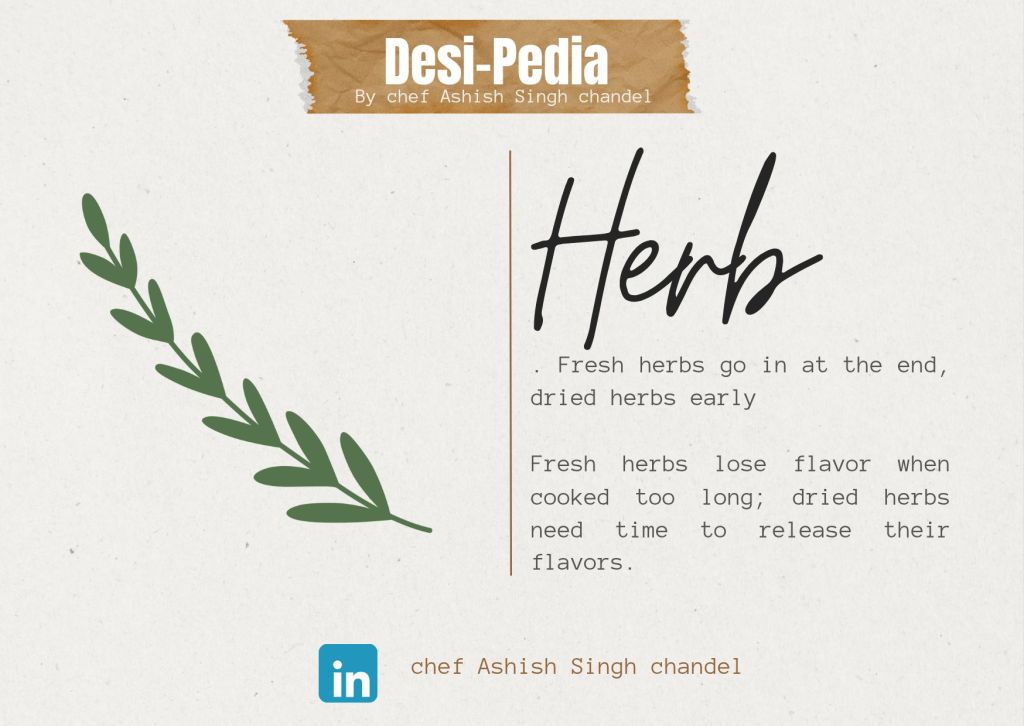
Fresh herbs are added at the end; dried herbs are added early.
Let’s explore why this matters, how it affects flavor, and how chefs can use this knowledge to elevate their dishes.
The Nature of Herbs – Fresh vs. Dried
Fresh Herbs
Fresh herbs like basil, cilantro, parsley, chives, mint, and dill are delicate, vibrant, and loaded with volatile aromatic oils. These oils are responsible for the bright, fresh, often grassy or floral flavors that define these herbs.
Why add them at the end?
Volatility of Flavor: Prolonged heat causes the essential oils in fresh herbs to evaporate, leaving behind little more than green flecks.
Color and Texture: Overcooking fresh herbs causes them to lose their bright color and wilt unattractively into the dish.
Impact: Adding them at the end—during the final minute of cooking or just before plating—preserves their aroma, visual appeal, and flavor punch.
Dried Herbs
Dried herbs—like thyme, oregano, rosemary, bay leaf, sage, and marjoram—are concentrated versions of their fresh counterparts. Drying removes moisture but intensifies flavor, especially when the herbs are properly stored and used.
Why add them early?
Flavor Extraction: Dried herbs need time and moisture to rehydrate and release their full bouquet of flavor into a dish.
Structure: They’re more robust and can withstand long cooking processes such as simmering, roasting, or braising.
Integration: Adding dried herbs early allows their flavor to meld seamlessly into the overall profile of the dish.
“Examples from the Professional Kitchen
A slow-simmered tomato sauce benefits from dried oregano or thyme added early, but a chiffonade of fresh basil at the very end will brighten and balance the dish.
In soups and stews, bay leaves are added at the beginning for subtle earthy notes. Just before serving, chefs often finish with chopped parsley or cilantro for freshness.
In grilling or roasting, rosemary and sage work well when used as dried rubs or marinades early on. But a sprinkle of fresh thyme or chives after grilling can give an added layer of complexity.
Understanding when and how to use herbs is a fundamental skill that separates technically sound cooking from truly thoughtful cuisine. It’s a small, subtle choice that speaks volumes about a chef’s experience, attention to detail, and respect for ingredients.
In the dance of time, temperature, and taste—herbs are your finishing flourish or your foundational note. Use them wisely.
Pro Tips for Chefs
1. Layering Herbs: Don’t hesitate to use both fresh and dried forms of the same herb in a dish—dried early for base flavor, fresh at the end for aroma and lift.
2. Infusing Oils: Dried herbs can be lightly bloomed in oil to create a herb-infused base for cooking—great for risottos, pastas, or searing proteins.
3. Preserving Freshness: If prepping dishes in advance, always reserve the addition of fresh herbs until just before service for maximum impact.
4. Quality Matters: Dried herbs lose potency over time—rotate stock every 6 months. Fresh herbs should be stored correctly (wrapped in damp paper towels or kept in chilled water jars) for peak performance.
“Herbs are the music of the kitchen—they add rhythm, harmony, and the soul to every dish.” – Unknown
The fragrance of herbs is the perfume of the Earth—fresh, honest, and full of life.” – Chef Ashish Singh
0 Comments