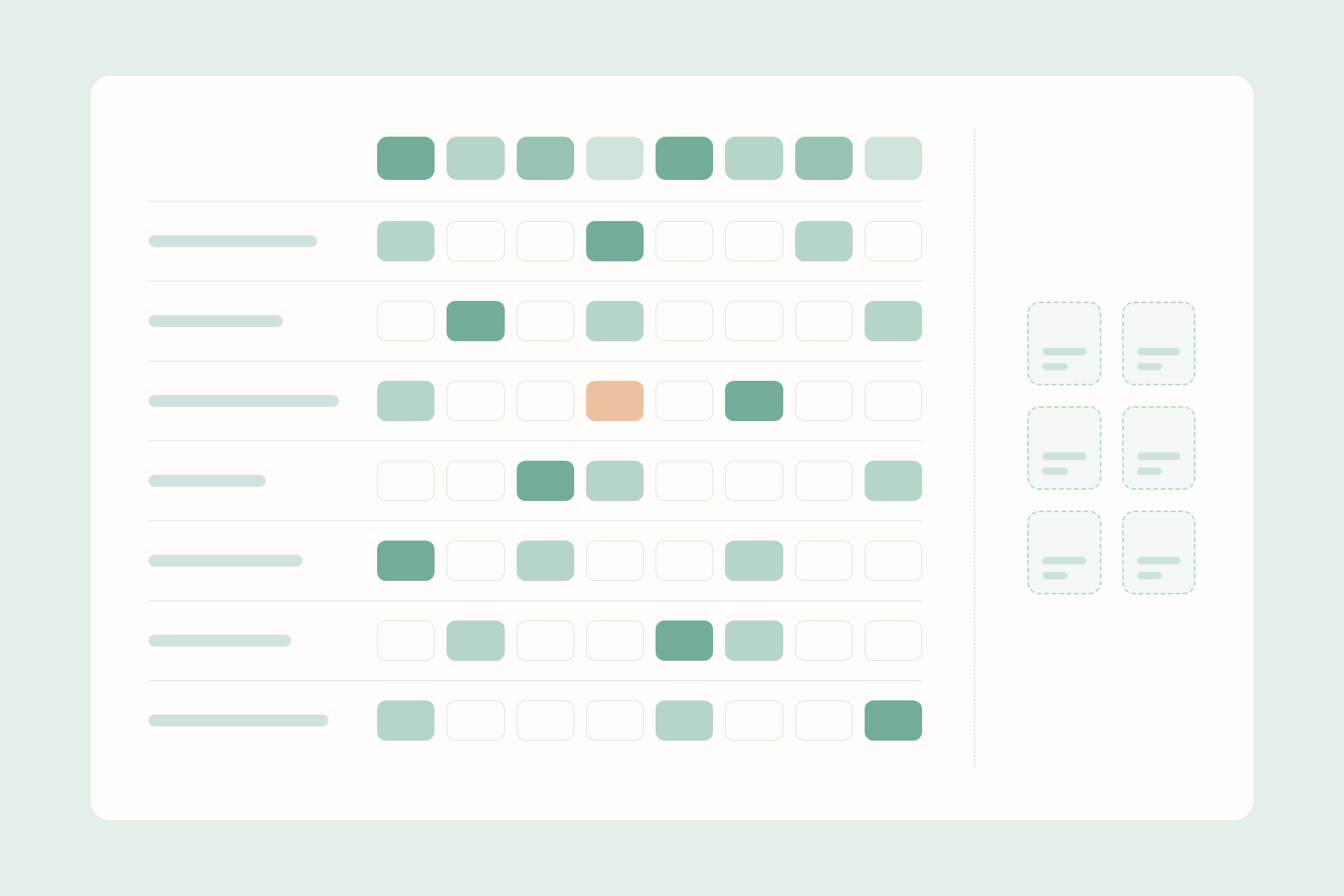
Under the Food Safety and Standards (Labelling and Display) Regulations 2020, a hotel, restaurant or quick service outlet has to declare eight allergen groups against each item on the menu. Most kitchens know the rule and still cannot answer the question quickly, because nobody has written down which of their own dishes carry which allergen.
This chart does that in one pass, and then stays on the wall as the answer.
What it covers
- The eight groups FSSAI requires on a menu card or board: cereals containing gluten, milk, egg, fish, crustacean, peanut, tree nuts and soybean.
- Where each one hides in an Indian kitchen. Cashew paste in a white gravy, hing in a spice blend, groundnut oil in a chutney, soy in a bought-in sauce, milk solids in a dessert.
- A blank column headed “dishes on our menu”. That column is the difference between a poster and a record.
- The six further allergens declared internationally — molluscs, sesame, mustard, celery, sulphites and lupin — for kitchens serving overseas guests or working to an export or airline contract.
- The controls that stop cross-contact, in the order a section actually works through them.
How to use it
Print A4 for the file and A3 for the wall. Fill the right-hand column with a section head, dish by dish, working from the recipe cards rather than from memory. It takes an afternoon, and it is the fastest way to find out whether your allergen matrix describes the food you are actually serving.
Then re-check it whenever a recipe changes or a supplier is switched. The common allergen incident is not a new dish. It is an old dish made with a new sauce.