

You walk through the door and it hits you. You immediately recognize the smell of
your favorite holidhay foods. Almost as quickly your body responds. Your mouth
begins creating saliva and your stomach rumbles. The smell of food not only allows
you to recognize it is time to eat, but it lets your body begin to prepare to digest your
food. While smell is a very strong memory stimulus for all humans, it has a special
relationship with taste and our concept of flavor.
Scientifically, smell (olfaction) and taste (gustation) are part of the human body’s
sensory system. Specifically, they function through chemoreception, which is the
ability of a body to respond to chemicals in the immediate environment. In gustation
your body is responding to chemicals referred to as tastants, chemicals that can
stimulate taste receptors. Similarly, in olfaction, receptors in your nasal cavity are responding to chemicals called odorants that stimulate smell receptors. Typically
when we comment on how great a specific food or beverage tastes, what we are really
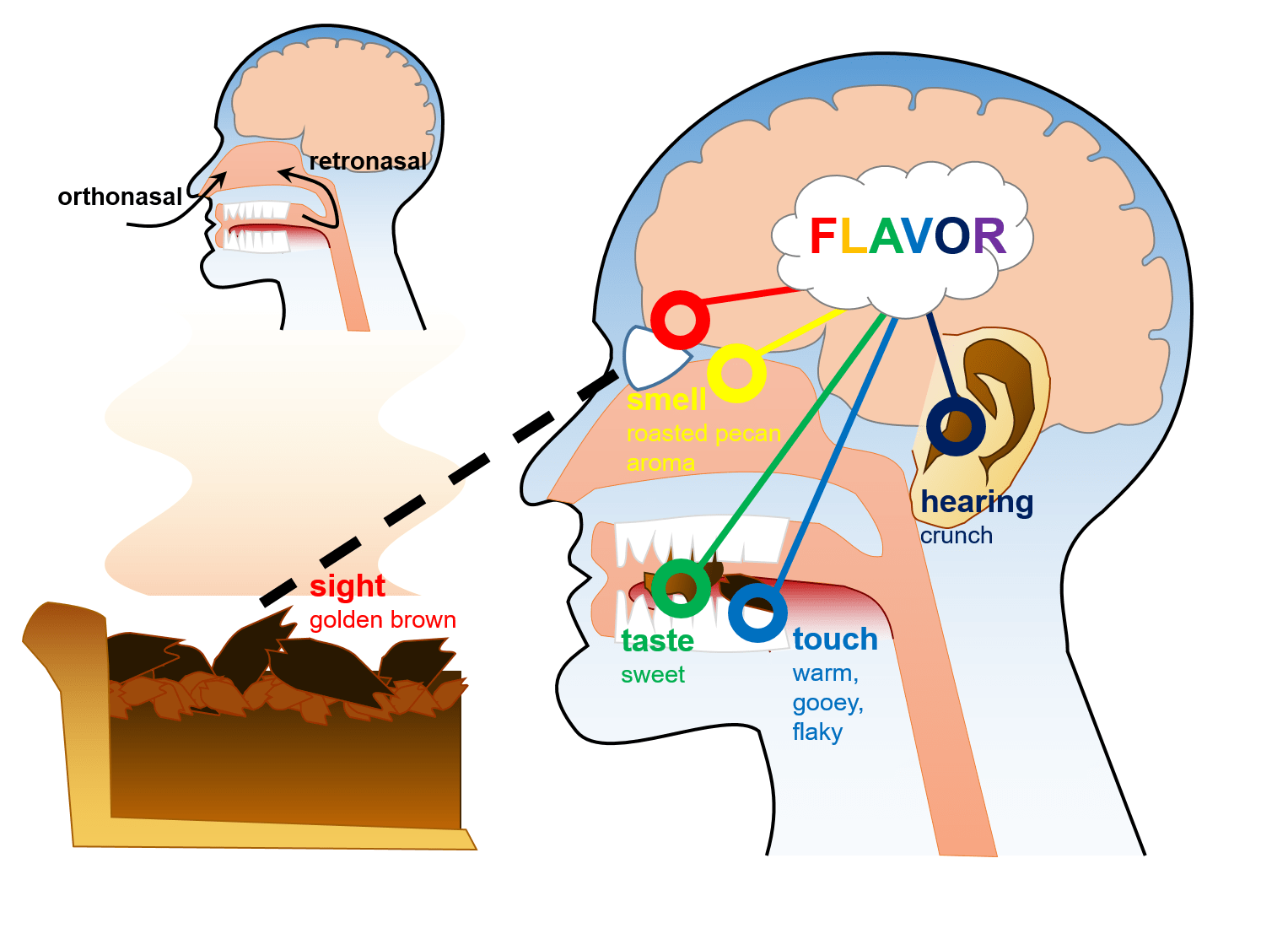
commenting on are is the flavor of that item. Flavor is the blend of taste and smell
sensations you perceive while eating and drinking. The term flavorant can be used as
a compound that uses both senses to impart a flavor. Another common usage of tastant
is a compound that mimics a flavor or gives a food or drink its flavor.
“smell and taste are in fact but a single sense, whose laboratory is the both and whose
chimney is the nose”
Myths
DIFFERENT TONGUE REGIONS DETECT DIFFERENT TASTES
Truth
In 1901, German scientist D. P. Hänig promoted the idea
that different tastes were stronger in different parts of the
tongue. This research was later used to create a “taste map.”
Now, we know that all tastes are sensed across the tongue
and difference in sensitivity across the tongue is negligible.
How do we taste???
Taste is a surprisingly complex process.
A multisensory experience, taste involves
aroma, texture, and heat, all combining to create
an overall impression.
As you lift food to your lips, before any food
actually reaches the tongue, aromas flood
the nostrils. Teeth then break down food,
releasing more aromas, and the food’s
texture, or “mouthfeel,” becomes
critical to its appreciation. In the
mouth, more flavor-carrying
particles waft to the back of
the oral cavity, up to the smell
receptors, but now they are
experienced as if coming from the
tongue. Sweet, salty, bitter, sour,
umami, and fatty taste receptors
(see opposite) are stimulated, and
a cascade of messages filters to the
brain. As you chew, hot food cools,
increasing taste intensity: at 86–95ºF
(30–35ºC), taste receptors are most active.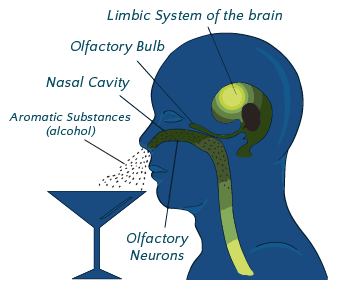
SALTY
SALTY TASTE RECEPTORS
ARE STIMULATED BY SODIUM
(TYPICALLY IN SALT),
IMPORTANT FOR KEEPING
THE BODY’S INTERNAL SALT
LEVELS BALANCED.
BITTER
BITTER TASTE RECEPTORS
ARE TRIGGERED BY A WIDE
RANGE OF POTENTIALLY
HARMFUL NATURAL TOXIC
SUBSTANCES, ALERTING THE
BODY TO DANGEROUS
FOOD.
SOUR
WHEN RECEPTORS DETECT
ACIDS IN FRUITS, THIS
SUGGESTS A SOURCE OF
VITAMIN C (ASCORBIC ACID),
OR ACTS AS A WARNING
THAT A FOOD IS
DECAYING.
FATTY
IN THE LAST DECADE,
RESEARCH HAS SHOWN THAT
TASTE RECEPTOR CELLS CAN
SENSE FAT MOLECULES IN
FOOD, INDICATING THAT THE
FOOD IS A RICH SOURCE
OF ENERGY.
UMAMI
UMAMI RECEPTORS DETECT
SAVORY, MEATY TASTES,
STIMULATED BY GLUTAMATE
FROM AN AMINO ACID,
WHICH SUGGESTS THAT A
FOOD PROVIDES
PROTEIN.
SWEET
PRIMARILY TRIGGERED BY
SUGARS, SWEET TASTE
RECEPTORS SIGNAL THAT
A FOOD IS A SOURCE OF
EASILY DIGESTED
ENERGY.
WHY DO WE TASTE?
The value of this system of five basic tastes comes in part through its use as a basic
survival mechanism. Taste allows us to evaluate the nutritious content of food while
preventing us from eating toxic substances. Salty taste allows us to identify foods and
liquids that contain essential salts necessary for the maintenance of electrolyte
balance. Sweet taste allows us to identify food that is high in energy‐rich nutrients.
Umami allows recognition of amino acids and proteins necessary as building blocks
for proteins in our bodies. On the other hand, bitter and sour tastes give us a warning
against the intake of potentially noxious or poisonous substances.
Thanks for your deep reading ..
Keep following for more …..
Reblogged this on Payalopia.
Thank you so much !!
A well written & insightful article..
Thanks dear ….plz like it n share it which will help me to make it reach to maximum …
Its Amazing
Thank you so much …please share ,like and follow to increase my network ..